

Property Management Blog

RTDRS Alberta: What Grande Prairie Landlords Should Know Before Filing
Key Takeaways: the RTDRS hears Alberta landlord claims up to $100,000 filed within two years of discovery, and government filing fees moved to a tiered $75/$150 structure on April 1, 2026. All hearings are by telephone. Most landlord files are lost on defective notices and unprovable service, not on the facts. Here is the process as it runs in 2026 and what delay actually costs on a Grande Prairie rental.
Most Grande Prairie rental owners never think about the Residential Tenancy Dispute Resolution Service until the month a tenant stops paying. Then the questions come fast: how long does this take, what does it cost, what do I have to prove, and can I just change the locks? (No. Never.)
The RTDRS is Alberta's quasi-judicial tribunal for residential tenancy disputes. It exists so landlords and tenants can settle unpaid rent, possession, deposit and damage claims without going to court. It works well — but only for the applicant who arrives with clean notices, provable service and an organized evidence package. Landlords lose winnable files on procedure, not on facts.
Here is the process as it actually runs in 2026, with the rules that matter to an owner in Grande Prairie.
What the RTDRS can and cannot do for a landlord
As a landlord, you can apply for unpaid rent and utilities, termination of the tenancy and possession of the premises, compensation for an over-holding tenant who did not leave at the end of the tenancy, other financial damages from a breach of the rental agreement or the Residential Tenancies Act, and an order requiring a non-tenant occupant to vacate.
Two hard limits apply to every application: the claim must be filed within two years of the date the potential claim was discovered, and it must be for $100,000 or less. Anything above that cap belongs in the Court of King's Bench.
It is just as important to know what the tribunal will not do. The RTDRS cannot order specific performance, cannot investigate an offence or a bylaw or building-code violation, cannot fine anyone, cannot order that a neighbouring tenant be evicted, cannot pre-emptively stop a party from doing something in the future, and cannot award compensation for defamation. Owners who file expecting the tribunal to police behaviour rather than award a remedy leave the hearing disappointed.
Government filing fees changed on April 1, 2026
The RTDRS moved to a tiered filing-fee structure effective April 1, 2026. Fees are now $75 for claims or counterclaims of $7,500 or less, $150 for claims over $7,500, and $100 for a counterclaim over $7,500 where an active RTDRS application already exists between the same parties. Fee waivers remain available to applicants who can provide three months of income documentation.
Most single-unit files — one or two months of arrears plus modest damages — still land in the $75 tier. The practical consequence of the change is that padding a claim with speculative damages can push a straightforward file into the $150 tier without improving the outcome. Claim what you can prove.
Fees are payable by credit card, cheque or money order made out to the Government of Alberta. The RTDRS does not accept cash, and it no longer offers in-person service — applications go in online through the eFiling service, by fax or by mail.
Get the notice right first, or the file collapses
Almost every landlord application starts with a notice, and a defective notice is the single most common reason a hearing goes sideways. For a substantial breach, including non-payment of rent, the tenant must receive at least 14 clear days' notice: the day the notice is served and the day the tenancy ends are both excluded from the count. Serve on the 4th and the earliest termination date is the 19th.
Every landlord notice must be in writing, give the address of the premises, be signed by the landlord or the landlord's agent, state the reasons for the eviction and state the date the tenancy ends. A notice for unpaid rent must additionally set out the rent due as of the date of the notice plus any rent that becomes due during the notice period, and it must state that the tenancy will not be terminated if the tenant pays the rent owing on or before the termination date. A tenant cannot object to a 14-day notice that is for non-payment of rent, which is exactly why that notice has to be flawless.
A 24-hour notice is a different instrument, reserved for significant damage to the premises or an assault or threatened assault. If the tenant does not leave, the landlord has 10 days after the stated end of the tenancy to apply to the RTDRS or the court; miss that window and the notice is dead and the tenancy never ended. Our overview of eviction notices Alberta landlords can serve walks through each notice type in more detail.
Service is a documentation exercise
You must serve a copy of the Application Package on each named respondent at least three clear days before the hearing — excluding the date of service, the hearing date, weekends and holidays. A Tuesday hearing means service completed no later than the previous Wednesday.
Accepted methods for a landlord are personal service, registered mail to the rental premises, email where the parties have already communicated or agreed to communicate by email and you can demonstrate delivery, service on an adult who appears to live with the tenant, posting in plain sight on the door the tenant uses most where the tenant is evading service or temporarily absent, or service at a corporation's registered office address.
Two details cost owners hearings. Registered mail is only served on the date the respondent signs for it — a tracking number showing "attempted" is not service. And if the tenant has already moved out, posting on the premises is not valid service at all. Keep dated notes of every service attempt; you will need them for the Declaration of Service by Landlord, and the Tenancy Dispute Officer — not you — decides whether service was met.
The hearing is by telephone, and it is decided on the paper you filed
All RTDRS hearings are scheduled by telephone. An in-person hearing in Calgary or Edmonton is possible only with the other party's consent and a request made to the Tenancy Dispute Officer at the telephone hearing, which adjourns the matter to a new date. For an owner in the Peace Country, telephone hearings are a genuine advantage: no travel, no lost day, no downtown parking.
Be available at the scheduled start time and for 90 minutes after it, from a phone that will accept calls from an unknown or blocked number. Have your application package, evidence and any witness contact numbers in front of you. Respondents are expected to give their evidence to both the RTDRS and the applicant at least 24 hours before the hearing, and late evidence may not be accepted — hold your own package to the same standard.
The Officer usually gives verbal reasons plus a written order at the end of the hearing. On a more complicated file the decision may be reserved and provided in writing within 30 days.
An order is not the same as getting your unit back
This is where self-managing owners most often underestimate the work. An RTDRS order must be filed at the Court of King's Bench as soon as possible to be enforceable as a judgment of that court; either the RTDRS files it or you do, and you then serve a filed copy on the respondent. Most RTDRS orders are valid for 10 years.
If the order is conditional — payment terms the tenant must meet to stay — and the tenant defaults, you serve a Notice of Default before enforcing. If the tenant will not leave, only a Civil Enforcement Agency can carry out possession. You never change locks, remove belongings or cut utilities to force a tenant out; self-help eviction converts a file you were winning into liability you own.
The Officer may also issue a Referral to Court order where the matter is too long or complex or raises constitutional, human-rights or other issues outside the tribunal's authority, or a Dismissed order if the claims are not proven or the applicant does not appear.
What this costs in a soft rental market
The filing fee is the smallest number on the page. The real cost is vacancy and arrears while the process runs.
Grande Prairie's rental market has loosened but is still tight by national standards: CMHC's October 2025 survey put purpose-built vacancy at 2.3%, up from 2.1% a year earlier, with average rent at $1,392 (+5.8%). Alberta's Regional Dashboard shows the average two-bedroom at $1,445 in 2025. On the asking-rent side, Grande Prairie averaged $1,422 in August 2026, sixth lowest of 25 mid-sized Canadian markets, while national asking rents have been declining year over year.
Run the arithmetic on a $1,400 unit. Two months of arrears before you act, a 14-day clear notice, a hearing, a written order, filing at the Court of King's Bench and a Civil Enforcement Agency appointment can easily consume three to four months of gross rent — well over $4,000 — before turnover costs. That is the number that should drive your decisions, and it is why the two cheapest interventions in this entire process happen long before an application: disciplined tenant screening in Grande Prairie, and serving a correct notice the first week rent is late rather than the third month.
How to keep files out of the tribunal
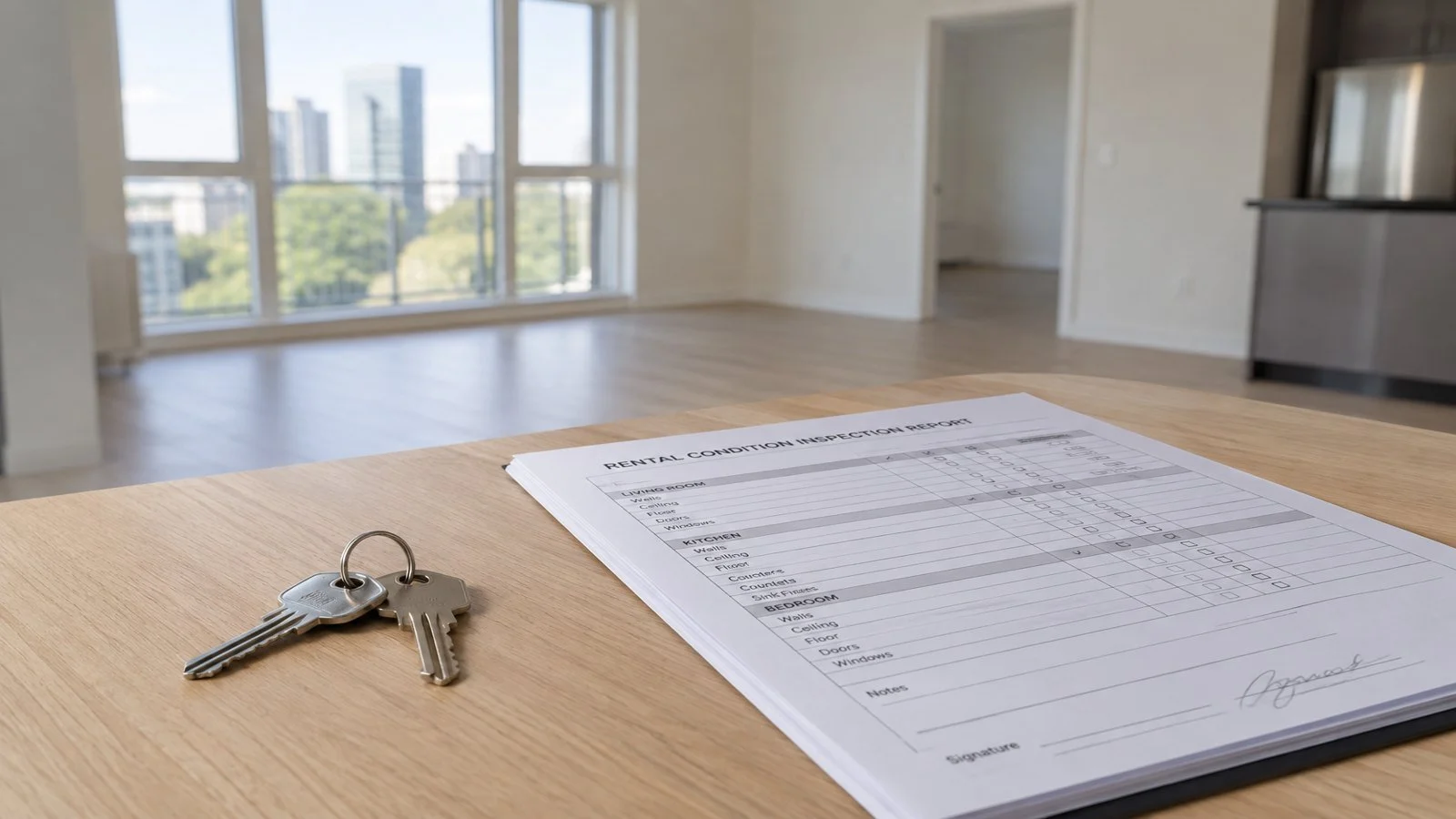
Owners who rarely see the RTDRS tend to do the same unglamorous things. They screen to a written standard applied identically to every applicant. They put rent due dates, late fees and utility responsibility in the agreement in plain language. They document condition at move-in and move-out with inspection reports, which is also what preserves the right to deduct from a deposit — see our guide to Alberta security deposit rules. They follow up on a missed payment within days, in writing, and keep the entire thread. And they raise rent lawfully and predictably rather than in one large jump that triggers a fight; the mechanics are in our summary of Alberta rent increase rules.
Note also that the RTDRS records only bind the parties in front of it. Filing does not create a public blacklist, and past written decisions are published on CanLII — a reminder that how you conducted yourself as a landlord will be read back at you.
Where an owner should get help
Nothing above requires a lawyer; self-representation at the RTDRS is normal. What it requires is procedural discipline at moments that are easy to fumble while you are also annoyed, out of pocket and dealing with a tenant who has stopped returning calls.
That is the case for delegating it. Handling notices, service records, evidence packages, hearings and enforcement is routine work for professional property management in Grande Prairie, and the same systems that produce a clean tribunal file — screening, documented inspections, written arrears follow-up — are what stop most disputes from reaching a hearing at all. If you would like a straight answer on how a specific arrears or eviction situation should be handled, or you want your current tenancy documents reviewed before there is a problem, contact our Grande Prairie property management team. More owner questions are answered in our owner FAQ.
This article is general information for Alberta rental owners, current as of September 2026, and is not legal advice. Verify current rules, fees and forms with Service Alberta and the RTDRS Rules of Practice and Procedure before you file. Sources: Alberta.ca RTDRS pages (overview, apply, hearings and orders, legal resources), Alberta.ca "Ending a tenancy" and Service Alberta's Information for Landlords, the RTDRS Rules of Practice and Procedure (February 2026), CMHC Rental Market Survey (October 2025), Alberta Regional Dashboard, and Rentals.ca / Urbanation asking-rent data reported for August 2026.
Alberta Security Deposit Rules: What Grande Prairie Landlords Can Legally Deduct
Key takeaways: Alberta caps a security deposit at one month's rent, pets included, and it must sit in an interest-bearing Alberta trust account within two banking days. Without properly completed move-in and move-out inspection reports you cannot keep any of it for damage, and the refund plus statement of account is due within 10 days of possession ending. The prescribed interest rate is 0% for 2026.
Most security deposit disputes in Alberta are not lost on the facts. They are lost on paperwork. A landlord can be completely right that a tenant wrecked the flooring and still hand back the full deposit, because a required inspection report was missing or a statement of account went out on day 14 instead of day 10.
Alberta security deposit rules sit in the Residential Tenancies Act (RTA) and its regulations, and they are unusually specific about timing and documentation. This is the practical version for owners renting out property in Grande Prairie and the surrounding Peace Country: what you can hold, where it has to sit, what you may deduct, and the deadlines that decide whether you keep a dollar of it.
How much you can collect, and what counts toward the cap
The maximum security deposit in Alberta is one month's rent. That is a hard ceiling, not a starting point, and there is no separate allowance stacked on top of it for pets, smoking, or "extra risk" tenants. A pet deposit lives inside the same one-month limit.
Two consequences owners routinely miss:
If a fixed-term lease simply continues as a periodic (month-to-month) tenancy under a clause in the agreement, it is the same tenancy, so the deposit cannot be topped up when rent rises.
If both parties sign a genuinely new fixed-term agreement, the rent and deposit can be renegotiated, still subject to the one-month cap.
Non-refundable fees are a separate matter and cannot be quietly renamed as deposit money. If a charge is refundable and held against the tenant's obligations, treat it as part of the security deposit and cap it accordingly.
The deposit is trust money, not working capital
Every security deposit collected in Alberta must go into an interest-bearing trust account at a bank, treasury branch, credit union, or trust corporation in Alberta, within two banking days of receiving it. Only security deposit money may sit in that account, and the landlord is the trustee of it on the tenant's behalf.
Interest is set annually by the province. The prescribed rate is 0% for January 1 to December 31, 2026, after 0.5% in 2025 and 1.6% in 2024 — the first years interest was actually payable since 2009. A zero rate does not remove the trust-account obligation, and it does not remove the interest paperwork if a tenancy spans years when the rate was above zero. Interest is payable to the tenant annually unless there is a written agreement that it will be paid at the end of the tenancy.
Self-managing owners who deposit rent and deposits into one chequing account are exposed here. The failure is invisible until a dispute, and then it is the first thing that surfaces.
No inspection reports, no damage deduction
This is the single most expensive rule for small landlords in Alberta.
You and the tenant must inspect the premises together within one week before or after the tenant takes possession, and again within one week before or after the tenant gives up possession. The landlord must complete a written report describing the condition each time, include the statements prescribed by regulation, have it signed, and give the tenant a copy immediately on completion. Keep it for at least three years.
If both the move-in and move-out reports are not properly completed, the landlord is not permitted to keep any of the deposit for damage beyond normal wear and tear. The claim does not shrink; it disappears.
A tenant who refuses to attend does not block you. You may complete the inspection without them if you proposed two inspection times on different days, neither a holiday, both between 8 a.m. and 8 p.m., and no adult tenant agreed to attend. Document the offers in writing — that record is the reason the unilateral inspection stands.
Photos and video are strong supporting evidence, but they are supporting evidence. They do not substitute for the signed report.
What you can deduct — and what you cannot
A security deposit can be applied to:
repairing or replacing physical damage to the premises;
cleaning required because of extraordinary or abnormal use;
arrears of rent;
other costs the tenant agreed to in the tenancy agreement, such as utilities or late fees, where those conditions were actually written into the agreement.
You cannot deduct for normal wear and tear, which the RTA defines as the deterioration that occurs over time with use even though the premises receive reasonable care and maintenance. Duration of tenancy matters: scuffs on walls and floors and nail holes from hanging pictures after a three-year tenancy are wear and tear, not damage. Alberta's dispute service will not entertain a claim for fixing wear and tear at all. If the line between the two is where your disputes keep landing, our breakdown of normal wear and tear versus tenant damage is worth reading alongside this article.
Two further traps. First, the deposit is not last month's rent — if a tenant skips the final month's rent, that is an arrears and eviction issue, and telling them to "use the deposit" invites a losing dispute. Second, in a joint tenancy the refund cheque must be made out to all tenants, not the one who asks first.
The 10-day and 30-day clock
Within 10 days after the tenant gives up possession, the landlord must deliver one of the following:
the full deposit; or
the balance plus a statement of account itemizing what was used, where deductions match conditions the tenant agreed to; or
where the correct amount genuinely cannot be determined yet, the balance the landlord does not intend to use plus an estimated statement of account — with the remaining balance and a final statement delivered within 30 days after possession ended.
Delivery means personal service, regular or registered mail, or another method agreed in writing; a mailed refund counts as delivered on the postmark date. Miss the deadline and the tenant can go to court or Alberta's Residential Tenancy Dispute Resolution Service (RTDRS) for the whole deposit, whether or not a statement was eventually sent.
Ten days is short. It is also the reason move-out repair quotes should be lined up before the tenant hands back keys, which is exactly what a disciplined turnover process delivers. Our Alberta landlord turnover checklist sequences the inspection, quotes, and cleaning so the statement of account can actually go out on time.
When a claim exceeds the deposit
If damage or arrears exceed one month's rent, the deposit is only partial recovery. The RTDRS handles claims up to $100,000 for former and current tenancies, and applications must be filed within two years of when the claim came to your attention. Filing fees are $75 for claims of $7,500 or less and $150 for larger claims, with hearings held by phone or video.
What decides those hearings is evidence: signed move-in and move-out reports, dated photos, invoices rather than estimates of your own labour, a ledger showing arrears, and proof of how documents were served. Owners who assemble that file during the tenancy win; owners who assemble it after the tenant is gone usually do not. The same discipline applies when a tenant leaves things behind, because what a landlord can do with abandoned tenant belongings in Alberta depends on a written record kept for three years.
Why this matters more in the current Grande Prairie market
Grande Prairie's rental market has loosened. CMHC pegged the city's purpose-built vacancy rate at 2.3% in its most recent October survey, up from 2.1% a year earlier, while the average two-bedroom rent reached $1,445 in 2025. Rentals.ca and Urbanation put the average asking rent at $1,422 in August 2026, sixth-lowest among the 25 mid-sized markets they track.
Softer conditions change the deposit math in two ways. Higher rents over the past two years mean the one-month deposit you hold is worth more than it used to be, so more owners are tempted to lean on it. At the same time, longer vacancy periods mean a botched deduction costs twice: the refunded amount plus the days the unit sits empty while a dispute drags on. Rent-side decisions carry the same discipline — see our guide to Alberta rent increase rules for Grande Prairie owners.
A short compliance routine that prevents most disputes
Write the deposit amount into the tenancy agreement and never exceed one month's rent, pets included.
Move the deposit into a dedicated interest-bearing Alberta trust account within two banking days. If the unit is a condo, the corporation can also require a separate rental deposit from you; see condo rental rules in Alberta.
Complete, sign, and hand over the move-in report in the week around possession; store it for three years.
Spell out in the agreement any charges you may deduct, such as utilities or late fees.
Book the move-out inspection early, and paper the two offered times if the tenant will not attend.
Get repair and cleaning quotes before day 10 so the statement of account is itemized, not estimated.
Deliver the refund and statement inside 10 days, or send the estimated statement and close it out within 30.
None of this is complicated. It is simply unforgiving of gaps, which is why deposit money is where self-managing owners most often lose an argument they should have won.
Talk to a Grande Prairie property manager
Sutton Property Management handles deposits, trust accounting, inspection reports, and statements of account for owners across Grande Prairie and the Peace Country, so the deadlines are met without you tracking them. If you have a deposit question or a turnover coming up, get in touch with our team or review how our property management services work. Owners weighing self-management can also start with our owner FAQ.
Sources: Alberta Residential Tenancies Act ss. 19, 44–46 and the Residential Tenancies Ministerial Regulation; Security Deposit Interest Rate Regulation and Alberta.ca annual security deposit interest rate tables; Service Alberta RTA Handbook and RTDRS rules of practice; CMHC Rental Market Survey; Rentals.ca and Urbanation National Rent Report, August 2026. This article is general information, not legal advice.

How Much Can You Raise the Rent in Alberta? 2026 Rules for Grande Prairie Owners
Key takeaways: Alberta has no rent cap, but rent can only rise once every 365 days, never during a fixed term of a year or more, and a month-to-month increase needs three full tenancy months of signed written notice or the notice is void. With Grande Prairie vacancy at 2.3% and national asking rents down 4.8% year over year, the market — not the law — is what limits your number.
Almost every Grande Prairie owner we talk to in the fall asks a version of the same question: how much can I raise the rent, and when do I have to tell the tenant? Alberta's answer is unusual. There is no cap on the amount. What the province regulates is timing and paperwork — and those rules are strict enough that a sloppy notice can wipe out the increase entirely.
Here is what the current rules actually say, what the 2026 Grande Prairie market says about whether you should use them, and the calendar math that decides whether an increase makes you money or costs you a tenant.
There is no rent cap in Alberta — the limits are frequency, notice, and form
Alberta has no rent control and no annual guideline percentage. The province states plainly that there is no limit on the amount by which a landlord may raise the rent. If you see a page advertising an “Alberta rent increase guideline” for 2026, it is borrowing vocabulary from capped provinces like Ontario and B.C. Alberta publishes nothing of the kind.
What is regulated:
Once every 365 days. Rent cannot increase until at least 365 days have passed since the tenancy started or since the last increase, whichever is later. This comes from section 14(4) of the Residential Tenancies Act and section 3 of the Residential Tenancies Ministerial Regulation, and it applies “despite any agreement, declaration, waiver or statement to the contrary” — a lease clause promising more frequent increases is unenforceable.
No increase inside a fixed term of a year or more. If the 365th day lands mid-term, the increase waits until the term ends.
Consecutive short fixed terms do not reset the clock. Where a tenant occupies the same premises under back-to-back fixed terms of less than one year, the 365 days are measured from the start of the first agreement in the chain. Re-signing paperwork resets nothing; only time does.
Written notice, on a periodic tenancy. For month-to-month tenancies you must serve at least three full tenancy months of written notice. It is 12 full tenancy weeks for week-to-week, and 90 days for any other periodic tenancy. Longer notice in your lease wins over the statutory floor.
The notice must contain all required elements: the effective date of the increase, the landlord's signature, and the date the landlord signed. A notice missing any of those is void, and rent cannot be increased until a compliant notice is served and the full notice period runs again. Notices must go to each tenant individually — posting one in a common area does not increase anyone's rent.
Two more points owners routinely get wrong. First, a periodic tenant who receives a proper notice and does not give notice to terminate is deemed to have accepted the increase — there is no negotiation requirement and no approval step. Second, notice of a rent change is not legally required when a fixed-term tenancy ends and you offer a new agreement at a new rent, because the old tenancy simply expires. That is a legal shortcut, not a business one: a tenant handed a surprise number at renewal is a tenant shopping for somewhere else.
Alberta tribunals expect a real reason, applied evenly
“No cap” is not the same as “anything goes.” Reviewing the case law in May 2026, the Alberta Law Reform Institute and commentators at ABlawg noted two consistent principles from Residential Tenancy Dispute Resolution Service and court decisions: an increase must have a bona fide economic rationale, and it cannot be applied selectively — for example, singling out the one tenant who complains about repairs. An increase you can tie to documented operating costs, insurance, property taxes, or verified market rents is defensible. One you cannot explain is an invitation to a dispute you did not need.
What the 2026 Grande Prairie market says about using that freedom
The legal ceiling is irrelevant if the market will not pay it. Current local evidence:
CMHC's October 2025 survey put the Grande Prairie vacancy rate at 2.3%, up from 2.1% a year earlier, with average rent at $1,392 — a 5.8% increase, roughly half the 10.0% jump recorded the year before.
The Rentals.ca and Urbanation National Rent Report for August 2026 put Grande Prairie's average asking rent at $1,422, the sixth-lowest among the 25 mid-sized markets it tracks. Six of the eight cheapest markets in that ranking are in Alberta.
Nationally, average asking rent fell 4.8% year over year in August 2026 — the twenty-third consecutive month of decline.
Read together: rent growth in Grande Prairie is still positive but decelerating, vacancy is loosening, and the wider market is discounting. That is a market where an aggressive in-place increase is more likely to trigger a move-out than to lift annual income. We covered the same shift in more detail in our look at what rising vacancies mean for Grande Prairie property owners.
The math that actually decides it
Take a unit renting at $1,400 a month. A 5% increase adds $70 a month, or $840 over a year. Now price the downside: one vacant month is $1,400 gone, plus cleaning, paint touch-ups, advertising and your own time between tenants. A single month of vacancy erases roughly twenty months of that increase, and that is before turnover costs.
The practical thresholds we work with:
In-place tenant paying near market, low risk of leaving: a modest increase that keeps the unit slightly under asking rents usually beats chasing the top of the market.
Rent well below market after several flat years: stage the correction over two annual cycles rather than one large jump, and support it with maintenance the tenant can see.
Chronic problems — late payment, damage, complaints: a rent increase is not a discipline tool. Handle the tenancy issue on its own terms.
If you do end up in a turnover, speed is what protects the year. Our 10-day turnover checklist for Alberta landlords lays out the sequence that keeps a unit off the market for days rather than weeks.
Worked example: a month-to-month notice calendar
Say you want a new rent effective January 1 on a month-to-month tenancy that runs on calendar months, with the last increase effective more than a year earlier. Three full tenancy months of notice means October, November and December must each be complete months after service — so the signed notice must be served on or before September 30. Serve it on October 2 and the earliest lawful effective date moves to February 1. Miss a required element on the form and the clock restarts from the day you serve a compliant one.
Build the paper trail: keep a dated copy of the signed notice, record how and when it was served on each tenant, and note the market evidence behind the number. If the increase is ever questioned, that file is your case.
A five-point check before you send anything
Have 365 days passed since the tenancy began or the last increase took effect?
Is the tenancy periodic, or inside a fixed term where no increase is allowed yet?
Does the written notice show the effective date, your signature, and the date you signed?
Does the effective date leave the full statutory notice period — three full tenancy months on month-to-month?
Can you defend the number with real costs or comparable rents, applied to every comparable unit you own?
Talk it through before you commit
Rent setting in a softening market is a judgment call, and the wrong call costs a full month of income rather than a few dollars. We track what units in Grande Prairie are actually leasing for, not just what they are listed at, and we serve increase notices that stand up. If you want a second opinion on a renewal or a rent review across a portfolio, see how our Grande Prairie property management services work, or read the owner FAQ for how we handle renewals and rent reviews. Reach out through our contact page and we will give you a straight answer on the number.
Sources
Government of Alberta, During a tenancy (rent increase rules and notice periods); Residential Tenancies Act, SA 2004, c R-17.1, s. 14; Residential Tenancies Ministerial Regulation, AR 211/2004, s. 3 (consolidated to AR 162/2026, current as of June 29, 2026); Service Alberta RTA Handbook, Rent increases; ABlawg, “Can a Landlord Double Your Rent?” (May 25, 2026); CMHC Rental Market Survey, Grande Prairie historical summary (October 2025); Rentals.ca and Urbanation National Rent Report as reported by EverythingGP (September 10, 2026).

The 10-Day Turnover Checklist for Alberta Landlords
Key takeaways: Protect the turnover file, complete the required move-out inspection, make the deposit decision on time, and get the home ready for its next tenant without skipping the documentation that protects you.
A tenant has moved out. The keys are back. This is where a lot of rental owners lose money—not because the property needs work, but because the next ten days get handled as a loose collection of calls, photos and assumptions.
In Alberta, the move-out inspection and security-deposit process has firm rules. Operationally, this is also the moment to protect the next month’s rent. Treat it as a short, documented turnover sequence rather than a cleanup project that starts when someone finds time.
Day 0: Confirm possession, get the forwarding address, and protect the file
Record the date and time the tenant gave up possession and collect their forwarding address in writing. That date starts the deposit timeline. Make one turnover file containing the lease, move-in inspection report, notices, correspondence, work orders, invoices, photos and the move-out inspection report.
Do not begin by debating deductions. First establish the record. If there is a dispute later, a clean file is far more useful than someone’s memory of what the unit looked like.
Days 0–2: Complete the move-out inspection properly
Alberta requires both a move-in and move-out inspection report. The reports are what let a landlord compare condition at the beginning and end of the tenancy. Without meeting the inspection-report requirements, a landlord cannot deduct cleaning or damage costs from the security deposit—even if the repair itself was real.
Invite the tenant to attend. If they do not participate, the province says a landlord may inspect without them only after offering two inspection opportunities on different non-holiday days between 8 a.m. and 8 p.m. Photograph each room, identify the condition, and separate normal wear from actual damage. Be specific: “two fist-sized holes in bedroom wall” is useful; “bedroom damaged” is not.
Days 1–4: Make a decision on the deposit with evidence, not instinct
There are only two sensible paths:
No deductions: return the full deposit and any interest owing within 10 days after possession is given up.
Deductions may apply: within the same 10 days, return any undisputed balance with an itemized statement, or provide an estimate of the deductions and return the amount not being used. The final statement and any remaining money are due within 30 days after the tenancy ends.
Use invoices or a defensible estimate. Do not use the deposit as a shortcut for routine upgrades, normal aging or costs that are not documented. If the work will take time to price, the estimate route exists for that reason—but it still does not erase the 10-day obligation.
Days 1–5: Turn the unit into a product, not a work site
Once the condition is documented, put the vacancy work in the right order: safety or functional repairs first; cleaning and touch-ups next; then photos, listing copy and showings. Do not wait until every minor cosmetic item is perfect before preparing the listing. The goal is to shorten the overlap between repairs and marketing while keeping the advertised home accurate.
A useful owner question is not “how quickly can we list it?” It is “what is the one thing preventing a qualified renter from saying yes?” A broken lock, a dirty fridge or poor photos each deserve a different answer. Bundling them into a vague “turnover” job creates delay no one owns.
Days 3–7: Market while the work is visible and trackable
Vacancy days do not become less expensive because the owner is busy. Sutton’s owner FAQ explains that marketing should begin when notice is received, using the website, listing sites, local rental groups, office listings and signage as appropriate. That is the operating principle: start creating demand before the property is empty whenever access and the tenancy agreement allow it.
For each incoming inquiry, keep one standard: respond quickly, give accurate availability, and do not promise a showing date until the unit can actually be shown well. A rushed showing through an unfinished unit may generate activity but can also create the wrong expectation.
Days 5–10: Close the old tenancy and open the next one cleanly
Before a new tenant takes possession, make sure the previous file is closed: deposit statement or return sent, inspection record complete, repairs documented, keys accounted for and any unresolved utility or rent balance identified. Then start the new tenancy with the same discipline: a thorough move-in inspection and a clear record of condition, including a test of every smoke and carbon monoxide alarm (see our landlord guide to smoke and CO alarms in Alberta).
This is not bureaucracy for its own sake. A documented turnover protects the owner twice: it reduces the chance of a deposit dispute, and it makes the next vacancy easier to fill and manage.
The owner’s practical takeaway
The first ten days after move-out are a legal deadline and an income-protection window. The safest sequence is simple: document the condition, make evidence-based deposit decisions, run repairs and marketing in parallel where possible, then close the file before the next move-in.
If you want help making the turnover process more consistent across your rental, Sutton’s property management services cover marketing, screening, rent collection, maintenance coordination and owner reporting. You can also contact Sutton Property Management for a practical conversation about your specific property.
Turnover discipline matters even more when renters have more choice. Read our Grande Prairie rental-market update for property owners for the market context behind reducing avoidable vacancy days.
Source
Alberta Government, Ending a tenancy (move-out inspections, security-deposit timing, and tenancy-ending rules). This article is general information, not legal advice.

Grande Prairie’s 2026 Rental Market Shift: What Rising Vacancies Mean for Property Owners
Key Takeaways Grande Prairie’s residential vacancy rate reached 2.30% in 2025, up 9.52% year over year as rental supply increased. In a softer market, accurate pricing, faster vacancy turnarounds, and responsive marketing protect rental income. Sutton Group helps Grande Prairie property owners keep units competitive and reduce costly vacancy time. […]
Key Takeaways
Grande Prairie's residential vacancy rate hit 2.30% in 2025, up 9.52% year-over-year, according to the Government of Alberta's Regional Dashboard, as new rental supply hits the market across the province.
Across Alberta, CMHC's 2025 Rental Market Report and local reporting from Calgary and Edmonton confirm landlords are increasingly offering incentives, free rent months, moving allowances, waived deposits, to attract tenants, a shift not seen in years.
Self-managing owners are most exposed in a softening market: pricing mistakes, slow vacancy turnaround, and weak marketing cost far more when tenants have options.
Partnering with a professional property manager like Sutton Group protects your rental income by keeping pricing sharp, vacancies short, and your property competitive.
For years, Grande Prairie landlords barely had to think about marketing. Vacancy sat below 2%, tenants competed for units, and a For Rent sign did most of the work.
That's changing. Alberta-wide, rental supply has surged and vacancy rates have climbed across the province, with CMHC forecasting Edmonton's rate to rise to 4.5% in 2026 from 3.8% in 2025. Grande Prairie has felt this too: the city's residential vacancy rate rose to 2.30% in 2025, up 9.52% year-over-year, according to the Government of Alberta's Regional Dashboard.
For property owners, this is the first real test of a softer rental market in years. Here's what it means for you, and what to do about it.
1. Pricing your unit right matters more than ever
When vacancy was near zero, an overpriced unit still rented eventually. In a market where tenants have choices, an overpriced listing just sits empty, and every week of vacancy is lost income you don't get back. Getting the rent right from day one, based on real comparable data for your specific area and unit type, is now the difference between a 5-day vacancy and a 45-day vacancy.
2. Tenants are negotiating again, and comparing you to landlords who are ready for it
Across Alberta, landlords are starting to offer incentives to attract tenants: a free month, waived deposits, included parking. You don't necessarily need to match every incentive, but you do need a strategy. Self-managed owners who list a unit and wait are increasingly competing against professionally managed properties that market aggressively and respond to inquiries within hours, not days.
3. Turnaround speed is now a profit driver
In a tighter market, a slow turnaround, getting a vacant unit cleaned, photographed, listed, and shown, cost you less because tenants were lining up regardless. In today's market, every extra day a unit sits vacant compounds against you. Professional property managers build workflows specifically to compress this timeline.
4. This is a good moment to review your insurance and expense position too
Softer rents put pressure on margins, which makes it a smart time to double check you're not overpaying elsewhere. Insurance premiums, maintenance vendor rates, and how efficiently repairs are handled all affect your bottom line more when top-line rent is under pressure.
What this means for you
A softening market doesn't mean your investment is in trouble. Grande Prairie's rental demand is still supported by a diverse local economy across energy, healthcare, education, and regional services. But it does mean the owners who protect their returns going forward will be the ones who price accurately, market effectively, and turn units around fast, exactly what a full-service property management team is built to do.
If you're managing your own rental property and want a second opinion on where your rent should sit in today's market, or want to understand what a shift to professional management would do for your bottom line, we're happy to help.
Related owner resources
Market conditions are only one part of protecting a rental. For the practical steps after a tenant leaves, read The 10-Day Turnover Checklist for Alberta Landlords. Sutton’s Owner FAQ answers common questions about working with a property manager, and our Grande Prairie property management services explain the support available for marketing, screening, maintenance coordination and owner reporting. If you are considering adding rental supply to a property you already own, see our guide to adding a legal secondary suite in Grande Prairie.

Navigating 2025 Regulatory Changes in Property Management
Key Takeaways Compliance is tightening and more detailed: 2025 changes affect evictions, screening, rent transparency, deposits, privacy (PIPA), short-term rentals, and licensing, clear processes and documentation are now essential. Operational impact is real: Rules influence lease terms, maintenance planning, energy upgrades, taxes, zoning, and CRA reporting, directly affecting costs, profitability, and day-to-day decisions. Proactive planning […]

Key Takeaways
Compliance is tightening and more detailed: 2025 changes affect evictions, screening, rent transparency, deposits, privacy (PIPA), short-term rentals, and licensing, clear processes and documentation are now essential.
Operational impact is real: Rules influence lease terms, maintenance planning, energy upgrades, taxes, zoning, and CRA reporting, directly affecting costs, profitability, and day-to-day decisions.
Proactive planning protects your investment: Staying informed and aligning early with provincial and Grande Prairie municipal updates reduces risk, avoids penalties, and supports long-term property value.
Are you feeling unsure about how the 2025 regulatory changes might affect your rental property and the way you manage residents moving forward? For rental property owners, keeping up with evolving rules can feel overwhelming, especially when compliance, profitability, and resident satisfaction all intersect.
These updates are not just legal fine print; they directly influence lease terms, maintenance responsibilities, and day-to-day decision-making.
Understanding what is changing now helps you stay ahead instead of reacting later. For rental property owners in Grande Prairie, Alberta, Sutton Group Property Management works closely with landlords to make sense of these shifts in a clear, practical way. This guide breaks down what matters most so you can protect your investment with confidence.
Key 2025 Regulatory Changes Every Alberta Landlord Should Know
Navigating rental property regulations in Grande Prairie, Alberta, requires understanding updated rules on resident protections, transparency, privacy, sustainability, taxes, and licensing to keep your investments compliant and secure:
Enhanced Resident Protections and Fair Practices
In 2025, Alberta’s updated rules will give a clearer structure around notice periods, eviction steps, and resident screening.
For landlords in Grande Prairie, this means following defined timelines, applying screening criteria consistently, and keeping accurate written records to support every decision made during a tenancy.

These changes reduce disputes when handled properly. When documentation is complete and processes are fair, landlords protect their properties, maintain professional relationships with residents, and stay aligned with provincial expectations without unnecessary stress or guesswork.
Greater Transparency in Rent, Fees, and Security Deposits
Rental advertising now requires full clarity around rent amounts, mandatory fees, and payment expectations. Landlords must ensure listings match lease terms exactly, helping residents understand costs upfront and reducing misunderstandings before move-in discussions even begin.
Security deposits also demand closer attention. In Alberta, landlords must apply the government-set 0.5 per cent interest rate for 2025 and return deposits within required timelines, making accurate tracking and clear communication essential for compliance.
Privacy Compliance Under PIPA
Privacy remains a key responsibility for rental property owners. Alberta’s PIPA rules require landlords to collect only necessary resident information, explain why it is needed, and secure it properly, whether stored digitally or in physical files.
For Grande Prairie landlords, this includes applications, background checks, and ongoing records. Clear consent, limited access, and secure storage reduce risk while building trust with residents who expect their personal information to be handled responsibly.
Short Term Rental Compliance and CRA Oversight
Short-term rental rules continue tightening across Alberta, with municipalities requiring proper licensing, safety standards, and clear classification of rental use. Even if short-term use is limited, landlords must confirm local compliance before operating.
At the federal level, CRA scrutiny has increased around short-term rental income. Accurate reporting, proper licensing, and compliant classification help landlords avoid denied deductions, audits, and unexpected financial setbacks tied to non-compliance.

Energy Efficiency and Sustainability Expectations
Alberta continues to encourage higher energy efficiency standards, which directly affect how landlords plan maintenance and upgrades. In Grande Prairie, this may include improving insulation, heating systems, or appliances to meet evolving expectations while keeping operating costs manageable over time.
Proactive improvements often reduce long-term expenses and appeal to residents seeking comfortable, efficient homes. Planning upgrades early allows landlords to budget wisely, avoid rushed decisions, and maintain properties that align with both regulatory direction and asset preservation goals.
Municipal Property Tax and Housing Incentive Changes
Municipalities across Alberta now have greater flexibility around property tax structures and housing incentives. For Grande Prairie landlords, these changes may influence annual tax assessments, redevelopment planning, and future investment decisions tied to residential rental properties.
Understanding how local incentives or adjustments apply helps landlords anticipate expenses and opportunities. Staying informed allows property owners to align long-term plans with municipal priorities, whether that involves holding existing rentals or exploring future development options.
Land Use and Zoning Adjustments
Local land use bylaws and zoning classifications continue evolving in Grande Prairie and surrounding areas. These updates can affect how properties are used, expanded, or redeveloped, especially for landlords considering secondary suites or alternative rental configurations.
Reviewing zoning rules before making changes protects landlords from compliance issues. Clear awareness of permitted uses helps guide renovation decisions and ensures rental properties remain aligned with municipal planning requirements.
RECA Regulatory and Licensing Updates
RECA continues refining its framework under Alberta’s modernized Real Estate Act, strengthening oversight, licensing standards, and professional conduct expectations. These changes influence how rental-related activities are governed across the province.

For landlords, staying aware of RECA updates supports compliant operations and informed decision-making. A clear understanding of evolving standards helps protect investments and reinforces professionalism within Alberta’s rental housing landscape.
A Clear Path Forward for Confident Landlords
Staying compliant in 2025 does not have to feel overwhelming when you have the right guidance. Sutton Group Property Management, for rental property owners in Grande Prairie, Alberta, helps landlords understand regulatory changes, assess risks, and plan next steps with clarity.
From documentation to compliance support, our team focuses on practical solutions that fit your goals. Reach out to discuss your property, explore available options, and determine what approach makes the most sense for your investment moving forward.

The Importance of Regular Communication with Tenants and Property Owners
Key Takeaways Clear communication prevents misunderstandings and builds trust between landlords and tenants. Regular updates improve tenant retention and property performance by addressing issues promptly. Partnering with professionals like Sutton Group Property Management ensures efficient communication systems and maximizes your investment’s success. Strong relationships with tenants and property owners are essential to successful property […]

Key Takeaways
Clear communication prevents misunderstandings and builds trust between landlords and tenants.
Regular updates improve tenant retention and property performance by addressing issues promptly.
Partnering with professionals like Sutton Group Property Management ensures efficient communication systems and maximizes your investment’s success.
Strong relationships with tenants and property owners are essential to successful property management, and effective communication is what makes those relationships work.
Sutton Group Property Management recognizes that clear, consistent communication builds trust, reduces misunderstandings, and improves both tenant satisfaction and owner confidence.
When communication lapses, expectations misalign and conflicts arise. When it’s prioritized, issues are resolved quickly and relationships stay strong.
So why should you, as a property manager, commit to regular, transparent communication with tenants and owners? Here are the key reasons.
Why Regular Communication With Property Owners Matters
Goals Alignment
Conflicting goals, asymmetrical values and misplaced expectations are some issues that create tension and open conflict between property managers and property owners. Most of these issues happen because each side’s view of how the relationship should work is not understood by the other.
This lack of clarity creates room for wrong assumptions, leading to suspicion and disagreements. Proper communication prevents these problems by preempting them at the start of the relationship.
Systems Coordination
Property owners and property managers each have their preferred method for solving problems, as well as their specific ideas of how the property should be run.
Good communication between the two parties allows differences in perspectives and operations to reveal themselves, helping the two sides agree on how they will handle critical issues like finances, maintenance, reporting, etc., to enable them achieve their shared goals.
Building Trust
Without regular communications people fill the gaps in their knowledge with their own assumptions, which are not always accurate. Detailed information at regular intervals creates openness, transparency and trust.

hese are vital qualities that help the partnership between a property owner and property manager proceed without hiccups. Both sides must agree on what information is important, how much detail they need, the frequency of communication and accepted formats.
Enhanced Decision Making
Decision making delays impact tenant satisfaction because it can derail action on critical repairs. Over time these seemingly minor problems can translate into the rental having low tenant retention rates and poor financial performance.
These issues can be avoided through systems that permit quick decision-making. For that to happen, however, there must be a foundation of mutual trust and financial accountability.
Why Regular Communication With Tenants Matters
Ensuring Compliance With the Lease
If tenants don’t understand the terms of the lease agreement they can’t comply with them. The process of helping tenants comply with the lease does not begin with enforcement but with proper communication in the form of education during tenant onboarding.
These should be followed up with reminders when conducting seasonal inspections and during maintenance calls, to reinforce the rules until tenants become familiar with them.
Conflict Prevention and Resolution
Clear understanding of each party’s roles and responsibilities is the best way to avoid conflict.
Another important measure for preventing conflicts with tenants is to inform them of important changes that affect their lives, such as operational or management changes, upcoming maintenance and reasons for delays to a requested repair.

These small steps show tenants that they are seen, heard, valued and respected. Sometimes, that alone is enough.
Seamless Property Maintenance
Clear communication ensures that scheduled maintenance does not interrupt tenants’ lives and if disruptions are inevitable, tenants are prepared for them. It also ensures that tenants can submit maintenance requests and be sure that those requests will be attended to.
Good communication helps to frame a tenant’s expectation of how long requested repairs will take. Critically, it shows them how to fix some of those issues themselves.
Improved Tenant Retention and Profits
The most telling sign that a rental property does not have good communication systems is frequent tenant turnover. A rental property experiencing this problem will spend more money on property marketing and vacancy costs than it should.
A more cost effective approach is to understand why tenants routinely decline to renew their lease and the only way to get this information is to listen to the tenants, i.e. communicate with them.
How Landlords Can Build Strong Communication Systems
Information Should Be Complete, Clear and Consistent
The information you provide to tenants must be complete; covering every important aspect of the relationship. Remember that if guidelines do not exist, people will be free to act as they deem fit.
The information must also be comprehensible. Do not use languages or wording that makes it hard to understand. Maintain detailed records of all communication with property owners and tenants.

Especially, when dealing with tenants ensure consistency in your interpretation and implementation of the rules.
Use Technology and Automate Communication
As a landlord, making communication simple and reliable benefits both you and your tenants. Use familiar methods like email, SMS, phone, or a secure online portal where tenants can access important information such as lease agreements, rent payment records, notices, maintenance schedules, and repair requests.
Automating routine communications like reminders, payment notifications, and updates helps ensure nothing is overlooked and keeps tenants informed. It also allows you to respond promptly to questions or concerns, maintaining a smooth flow of information.
Build Relationships and Trust
Successful property management is ultimately about people. Tenants who feel seen, heard, and respected are more likely to comply with rules, take care of the property, and renew their leases. Trust is equally important between you and your property manager, who acts on your behalf to protect your investment.
Building trust involves consistent communication, timely responses, professionalism, empathy, fairness in resolving issues, and soliciting feedback when appropriate. When you prioritize clear, respectful communication, you create a positive rental experience that reduces conflicts, strengthens relationships, and supports the long-term success of your property.
Partnering with a professional property manager ensures these communication systems are managed effectively, giving you peace of mind while maximizing tenant satisfaction and your property’s performance.
Bottom Line
Effective, consistent communication is the foundation of successful landlord-tenant relationships. It prevents misunderstandings, supports timely maintenance, improves retention and ultimately protects your investment.
Partnering with a professional like Sutton Group Property Management ensures these communication systems are handled expertly, helping your property operate smoothly, efficiently and profitably.

What to Know About Renting to Tenants with Service Animals
Key Takeaways Service dogs are legally protected: In Alberta, landlords cannot deny tenancy or charge fees for certified service or guide dogs, as they are considered essential aids, not pets. Emotional support animals differ: ESAs are not automatically covered under the Service Dogs Act, but tenants may still require accommodation under the Alberta Human Rights […]

Key Takeaways
Service dogs are legally protected: In Alberta, landlords cannot deny tenancy or charge fees for certified service or guide dogs, as they are considered essential aids, not pets.
Emotional support animals differ: ESAs are not automatically covered under the Service Dogs Act, but tenants may still require accommodation under the Alberta Human Rights Act.
Professional management simplifies compliance: Sutton Group Property Management helps landlords handle documentation, accommodation requests, and legal obligations while protecting their investment and maintaining positive tenant relationships.
Did you know that in Alberta, landlords cannot refuse tenancy to someone who uses a certified service dog, even if the property has a strict “no pets” policy? Under provincial law, service and guide dogs are not classified as pets, they are essential aids that help people with disabilities live safely and independently.
With more Albertans relying on service animals for both physical and mental health support, it’s crucial for landlords to understand their legal obligations and how to handle these situations appropriately.
To help property owners navigate this important topic, Sutton Group Property Management has created this guide, outlining everything landlords need to know about renting to tenants with service animals.
Understanding Service Animals and the Law in Alberta
In Alberta, service and guide dogs are protected under several laws, including the Service Dogs Act, the Blind Persons’ Rights Act, and the Alberta Human Rights Act. These laws make it illegal for landlords to deny housing to a person who relies on a qualified service or guide dog.
The law views this as a disability accommodation, not a pet request. Refusing such a tenant or charging extra fees because of a service dog can lead to complaints or even fines of up to $3,000.
Service dogs are trained to perform specific tasks that assist with a disability, such as guiding individuals who are blind, alerting people with medical conditions, or providing mobility support.
They are different from emotional support animals, which offer comfort but are not trained for specific disability-related tasks.

In Alberta, a service dog must be certified by the provincial government or by an approved training organization. Handlers receive a Service Dog Identification Card that confirms the dog’s legal status.
Without certification, an animal may not automatically qualify as a service dog under provincial law, though the Alberta Human Rights Act may still provide protection if a disability-related need is proven.
What Landlords Can and Cannot Ask
When a tenant requests to live with a service dog, landlords have the right to ask for reasonable proof that the dog is certified. This typically includes viewing the provincial Service Dog Identification Card.
If the tenant’s animal is not certified, landlords can request documentation from a regulated health professional showing that the tenant requires the animal because of a disability. However, landlords cannot ask for specific medical information or personal details about the disability itself.
These requests should always be handled respectfully and confidentially. Asking for excessive information or refusing a tenant because of a service or guide dog can be viewed as discrimination under the Alberta Human Rights Act.
In most cases, landlords are expected to accommodate unless doing so would create undue hardship, which is a very high legal threshold.
Managing the Tenancy Responsibly
Once a tenant with a service dog moves in, landlords should treat them like any other tenant. Service and guide dogs are not exempt from normal tenancy rules regarding cleanliness, property maintenance, and noise.

However, landlords cannot impose “pet” restrictions or charge pet fees for these animals. They also cannot limit a service dog based on breed, weight, or size.
If a service dog causes damage to the property, the tenant is responsible for the cost of repairs just like any other renter. Landlords have the right to enforce reasonable rules to ensure the property remains safe and well-maintained.
If the animal’s behaviour poses a genuine safety risk or creates serious disturbances, the landlord can take action through standard tenancy channels.
Regular inspections are permitted with proper notice, as outlined in Alberta’s Residential Tenancies Act.
During these visits, landlords should focus on the overall condition of the property, not on the service dog itself. Professionalism and clear communication are key to avoiding misunderstandings.
Emotional Support Animals in Alberta
Landlords should be aware that Alberta’s laws distinguish between certified service dogs and emotional support animals (ESAs).
Only certified service dogs have guaranteed protection under the Service Dogs Act and Blind Persons’ Rights Act. Emotional support animals, which provide comfort or companionship but lack specialized training, do not automatically have the same rights.
However, a tenant who relies on an emotional support animal because of a disability may still be protected under the Alberta Human Rights Act.
In such cases, landlords should consider the accommodation request carefully and ask for appropriate documentation from a regulated health professional. Each request should be evaluated individually, and landlords should seek advice before denying a request.
How Property Managers Can Help
Handling accommodation requests involving service or support animals can be complex. A professional property management company can make the process easier and ensure all communication and documentation comply with Alberta’s laws.
They can verify certification, communicate with tenants, and ensure that property rules and lease agreements align with current legislation.
A property management team can also help landlords stay current with changes in provincial and human rights regulations. This support reduces the risk of fines, disputes, and complaints.
For landlords managing multiple units or who prefer a hands-off approach, partnering with an experienced management company is the most effective way to protect both property and reputation.
Bottom Line
In Alberta, landlords must accommodate tenants with certified service or guide dogs, even in “no pets” properties, as these animals are not considered pets and cannot incur extra fees.
Emotional support animals may also require accommodation, depending on the situation. Understanding these distinctions ensures landlords stay compliant and maintain positive tenant relationships.
Sutton Group Property Management helps Alberta landlords navigate these rules with professionalism, from verifying documentation to handling accommodation requests, ensuring legal compliance while protecting your investment.

Refinancing Your Rental Property Mortgage
Key Takeaways Refinancing rental properties in Canada can lower monthly payments, unlock equity, and improve cash flow, helping landlords grow their real estate portfolios strategically. Successful refinancing requires careful evaluation of costs, risks, tax implications, and lender requirements, including credit, property value, and proof of rental income. Partnering with a professional property management company like […]
Key Takeaways
Refinancing rental properties in Canada can lower monthly payments, unlock equity, and improve cash flow, helping landlords grow their real estate portfolios strategically.
Successful refinancing requires careful evaluation of costs, risks, tax implications, and lender requirements, including credit, property value, and proof of rental income.
Partnering with a professional property management company like Sutton Group PM strengthens your refinancing position by maintaining steady rental income, property value, and accurate financial records.
Owning a rental property in Canada offers great long-term potential, but it also comes with its share of complexities.
From managing tenants and maintaining the property to navigating market shifts, successful ownership requires careful planning.
One of the most effective strategies for boosting profitability is refinancing your rental property mortgage. When done strategically, refinancing can lower your monthly costs, unlock built-up equity, and provide the financial flexibility to expand your real estate portfolio.
At Sutton Group Property Management, we help landlords make informed decisions that support both immediate cash flow and long-term growth. In this guide, we’ll explore how refinancing works, when it makes sense, and how to approach it to maximize your investment returns.
What Does Refinancing Mean?
Refinancing replaces your existing mortgage with a new one. The new loan may come with a different interest rate, payment schedule, or amortization period.
Many investors use refinancing to secure lower monthly payments, restructure debt, or access the equity that has built up as the property’s value increases.
For example, if you originally purchased a rental property with a 25-year mortgage at a higher interest rate, and interest rates have since dropped, refinancing could provide substantial savings.
Alternatively, you may want to leverage equity through a cash-out refinance to fund renovations, expand your portfolio, or cover other investments.

Why Consider Refinancing?
There are several reasons refinancing appeals to rental property owners:
Lower Interest Rates and Payments: When market rates fall, refinancing allows you to take advantage of reduced borrowing costs. This means lower monthly payments and improved cash flow.
Access to Equity: Over time, mortgage payments reduce your principal balance while market appreciation boosts your property’s value. Together, they build equity. Refinancing lets you borrow against this equity to fund renovations or buy new properties.
Restructuring Debt: Some landlords use refinancing to consolidate high-interest debts. For example, rolling credit card or personal loan balances into a mortgage can reduce interest expenses and simplify payments.
Improving Cash Flow: By extending the amortization period or lowering monthly payments, refinancing can free up more income to reinvest, save, or use as a buffer against unexpected costs.
Tax Benefits: In Canada, interest on money borrowed for income-producing purposes (such as rental property) is generally tax-deductible. Refinancing for qualified uses may allow you to deduct interest expenses, reducing your taxable rental income.
When Refinancing Is Not a Good Option
Although refinancing has many benefits, it isn’t always the right move. Costs and risks must be weighed carefully.

Prepayment Penalties: Many mortgages in Canada include penalties for breaking or refinancing before the term ends. Depending on the amount, these penalties can offset the financial gains.
Closing Costs: Refinancing involves expenses such as legal fees, appraisal fees, and registration charges. If the potential savings don’t outweigh these costs, refinancing could be counterproductive.
Extending Amortization: Lower monthly payments often come from spreading the loan over a longer period. While this helps cash flow, it may result in higher interest costs over the life of the mortgage.
Unfavorable Market Rates: Sometimes current refinance rates are not significantly lower than your existing rate. Refinancing at such times may not provide meaningful savings.
Tax Implications: Using refinanced funds for personal, non-income-producing purposes can remove your ability to deduct interest expenses. It’s important to understand how the funds will be used before refinancing.
Key Requirements in Canada
Lenders in Canada look at several factors before approving a refinance:
Loan-to-Value Ratio (LTV): Most lenders will allow refinancing up to about 80% of the property’s appraised value. For cash-out refinances, they may require even more equity.
Credit Score: A strong credit history increases the likelihood of approval and more favorable rates.
Debt Service Ratios: Lenders calculate ratios such as the Gross Debt Service (GDS) and Total Debt Service (TDS) to figure out whether your rental income and personal income can support your mortgage payments.
Proof of Rental Income: You’ll need to provide rent rolls, lease agreements, and past tax filings that show rental revenue.
Property Appraisal: A professional appraisal determines the property’s current market value. Renovations and upgrades can positively influence this assessment.

The Refinancing Process
Refinancing is a multi-step process. Here’s how most Canadian rental property owners move through it:
Set Your Goals. Decide whether you want to lower monthly payments, access equity, or shorten the repayment term. Clear goals help you choose the right refinance structure.
Review Your Current Mortgage. Understand your current rate, amortization, and potential penalties. This gives you a baseline for comparison.
Research Rates and Options. Compare multiple lenders and mortgage products. Mortgage brokers can also be helpful in identifying competitive terms.
Organize Documentation. Gather recent rental income statements, tax returns, proof of insurance, and property tax bills. Lenders want to see a clear financial picture.
Get an Appraisal. Expect a professional appraisal as part of the process. Documented improvements to your property can increase its appraised value.
Calculate Costs. Include all closing costs and penalties in your decision-making. Calculate whether the potential savings outweigh these expenses.
Submit Application. The lender will review your documents, verify income, and assess your overall financial health.
Finalize and Close. Once approved, you sign new documents, your old mortgage is paid out, and your new loan terms take effect.
Tax Considerations
The CRA allows you to deduct interest on loans used to earn rental income, including refinanced mortgages and related fees like appraisals or legal costs.
However, interest on funds used for personal expenses (e.g., paying off your own home) is not deductible. Consult a tax professional to structure your refinancing for maximum tax benefit and compliance.
Risks and Pitfalls
Refinancing can help, but it comes with risks:
Increased debt may limit flexibility.
Market downturns can reduce property value.
Focusing only on lower payments may increase long-term interest costs.
Plan carefully and use conservative projections to avoid these pitfalls.
How Property Management Supports Refinancing
Lenders assess both your finances and the property’s performance. Professional property management boosts your chances of favorable refinancing by:
Ensuring steady rental income through reliable tenants.
Providing accurate financial and maintenance records.
A well-managed property strengthens your refinancing position and overall investment performance.
Conclusion
Refinancing a rental property in Canada can lower costs, unlock equity, and fuel portfolio growth, but it requires careful planning.
Weigh the pros and cons, assess timing and tax impacts, and seek expert advice. For ongoing success and lender appeal, partnering with a trusted property manager like Sutton Group PM can help you maximize your investment.

Property Management Guide for Foreign Investors
Key Takeaways Canada’s real estate market offers strong returns thanks to high demand, economic stability, and investor-friendly financing. Foreigners can still invest through legal workarounds like rural properties, partnerships, or qualifying exemptions. Partnering with experts like Sutton Group Property Management ensures legal compliance and maximizes ROI. Are you a foreign investor eyeing the Canadian […]
Key Takeaways
Canada’s real estate market offers strong returns thanks to high demand, economic stability, and investor-friendly financing.
Foreigners can still invest through legal workarounds like rural properties, partnerships, or qualifying exemptions.
Partnering with experts like Sutton Group Property Management ensures legal compliance and maximizes ROI.
Are you a foreign investor eyeing the Canadian real estate market? If so, you’re not alone, and you’re in the right place.
Canada’s property market is evolving quickly, offering a wide range of opportunities for both domestic and international investors. Fueled by a stable economy, a resilient housing sector, and rich cultural diversity, it’s no wonder real estate here continues to attract global attention.
However, investing in Canadian property as a non-resident comes with its own set of challenges. From understanding tenancy laws and tax obligations to managing day-to-day operations, there’s a lot to navigate, especially from abroad.
That’s where Sutton Group Property Management comes in. In this blog, we’ll walk you through the essential basics of rental property management in Canada, so you can invest with confidence and clarity, knowing your property is in expert hands.
Why Consider Investing in Canada’s Real Estate Market?
Canada’s real estate market offers compelling opportunities for investors seeking portfolio diversification, business expansion, or reliable passive income. With continued signs of growth across many regions, the market remains attractive, driven largely by strong demand for housing and a stable economic environment.
In addition to high demand, Canada has one of the most investor-friendly financing models globally. Unlike in many other countries, foreign investors face relatively few restrictions, making it easier to enter the market and build long-term value.
Is Buying a Property in Canada Possible for Foreign Investors?
Yes, absolutely! As a foreigner, nothing prevents you from buying a piece of real estate in Canada. But, of course, you must follow all the applicable rules to be successful.

In 2023, a law was passed by the Canadian government prohibiting non-locals from being able to buy residential property. The ban is going to last for a couple more years and will end on January 1st, 2027.
This prohibition shouldn’t discourage you, though. Why? Because, there are multiple ways in which you can bypass that regulation, which was meant to reduce competition from foreign buyers.
The following are some of the available investment options that can help you bypass the rule.
Invest in other investment property types, such as cottages, vacation villas, recreational properties, or even vacant rural land.
Get a real estate property in an area that is outside Census Agglomerations (CA) and Census Metropolitan Areas (CMA).
Partner with a local citizen, or with a spouse with Canadian citizenship.
Have a visa to work or study in the country, and are buying a property valued at no more than $500,000 Canadian dollars.
Buy a property for future employment or immigration in the next two years.
Also, consider working with a local expert. Ideally, a good property management company should help handle everything for you. You can also count on them for proper investment and financial advice.
What is the Canadian Real Estate Market Like?
As you probably know, a country’s real estate market is affected by certain market trends. Such as, government policies, interest rates, economic stability, and demographics.

What’s more, the purchase price of a particular property will vary based on the local property market trends. And these most likely being the property’s location and the prevailing rate of inflation.
In city- and touristy areas in Canada, for instance, they tend to have the highest return on investment (ROI) due to the year-round rental demand. However, if you choose to invest in such property types, you should expect higher upfront costs.
For more affordable options, you may want to consider towns, villages, and rural areas. That said, the locations may not be the most ideal for startup businesses.
What are the Various Investment Types to Consider in Canada?
Just like you’d find in other markets, like in the U.S., the Canadian real estate market has quite a diverse option list. These range from residential, to commercial, to industrial, to agricultural, and everything in between.
Here is a simple breakdown to help you with planning.
Residential property: These usually form the bulk of the country’s real estate market. And unsurprisingly so, as these are properties for occupation. They include single-family homes, cottages, condos, townhouses, and other home types.
Commercial property: Examples of commercial property types include office buildings, retail stores, and hotels.
Industry property: Examples of these include data centers, warehouses, manufacturing plants, and any other places used for production and storage purposes.
Agricultural property: Examples of these include ranches, farms, underdeveloped land, and other rural investments.
What Documents do you need to buy a Property in Canada?
Just like you would in other parts of the Western world, you’ll need several documents to acquire a property. But the specific documentation you’ll need will depend on your citizenship status. That is, whether you’re a citizen, a permanent resident, or a non-resident.

To become a permanent resident in Canada, the following are some key documents you’ll need.
A national identity card.
Proof of funds, credit report, or a mortgage pre-approval letter.
A purchase agreement, home inspection report, or home appraisal report.
A title deed, legal fees, or property insurance.
Financing approval from a Canadian financial institution, residency documents, or a work permit.
Work with a mortgage advisor for a smooth investment journey. A property manager can also help you navigate the process as smoothly as possible.
What is the Process of Buying a Property in Canada?
If you are an American, for instance, the following is the process you’d need to follow to buy a property in Canada.
Get the funds required to buy a property. This can be obtained by getting a mortgage from a bank in Canada or simply by paying in cash.
Obtain a Tax Number from the country’s revenue agency (CRA).
Understand your tax obligations.
Work with a reliable and professional property management company for investment advice.
Conclusion
Investing in Canadian real estate as a foreigner can be a highly rewarding opportunity, especially with strong market growth projections on the horizon. However, success depends on thorough due diligence and working with trusted local experts who understand the landscape.
At Sutton Group Property Management, we specialize in Grande Prairie, Alberta real estate and are committed to helping foreign investors maximize their return on investment. With our professional guidance and hands-on management, you can navigate the Canadian market with confidence.
Get in touch with us today to learn how we can support your investment goals.
Refinancing a rental property in Canada can lower costs, unlock equity, and fuel portfolio growth, but it requires careful planning.
Weigh the pros and cons, assess timing and tax impacts, and seek expert advice. For ongoing success and lender appeal, partnering with a trusted property manager like Sutton Group PM can help you maximize your investment.